The Gesture as Internal Landscape: A Post-Academic Inquiry
Reflecting on the body of work produced in the immediate post-academic period, one can identify a deliberate shift toward the intersection of gestural abstraction and phenomenological expression. Two decades later, these works stand as a testament to an era of intense stylistic distillation, where the primary objective was the deconstruction of traditional figuration in favor of the immediacy of the mark.
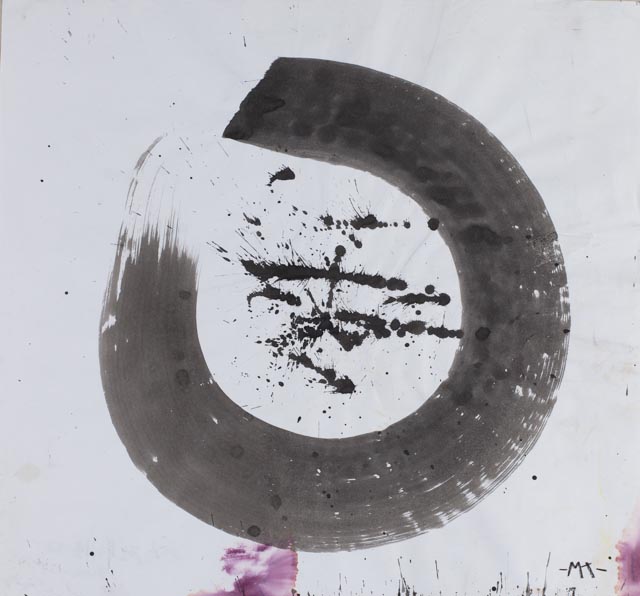
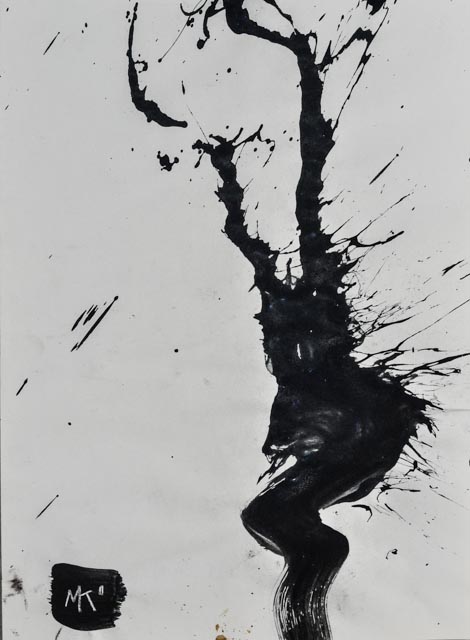
Drawing from the lineage of Lyrical Abstraction and the ethos of Action Painting, these series—specifically the Splash and Ink cycles—engage with the canvas as an arena for performative mark-making. The aesthetic strategy here relies on the tension between the volatility of the medium and the controlled spontaneity of the artist’s hand. By prioritizing the indexical quality of the brushstroke, these works transcend mere formal representation to function as psychological topographies—mapping the ephemeral interplay between intention and gravitational contingency.
In this context, the reduced formal language serves not as a void, but as an excavation of the painterly essence. It represents a pivotal transition from formal training toward a mature engagement with the autographic gesture, where each work operates as an autonomous, visceral record of the creative encounter. This period effectively served as the crucible for a lifelong investigation into the capacity of paint to articulate the non-verbal, bridging the gap between raw impulse and refined composition.